
No products added!
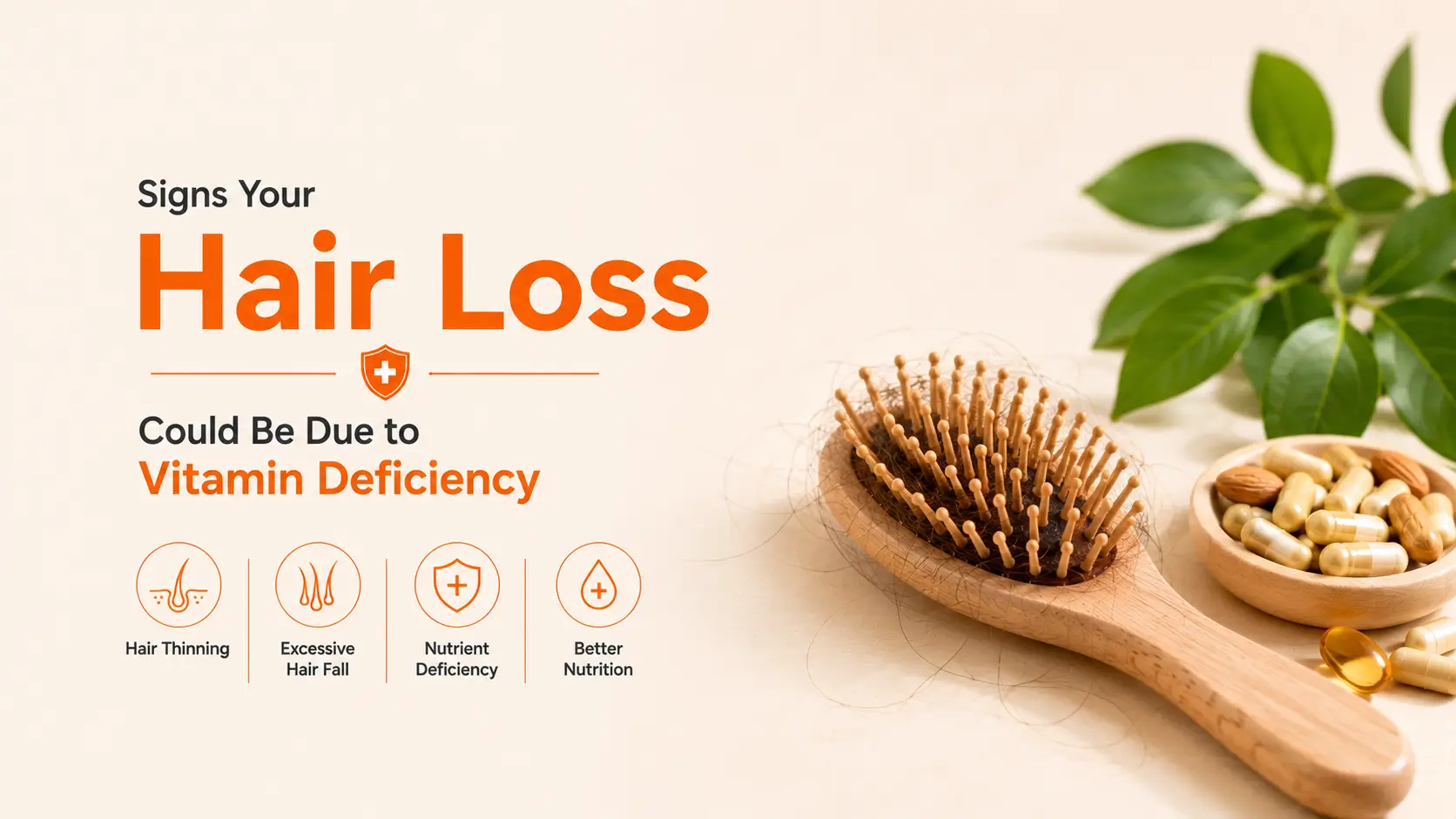
Have you been noticing more hair strands on your hairbrush, pillowcase, or shower
Table of Contents
drain lately? Finding loose hair everywhere can be worrying and frustrating. It is completely normal to lose around 50 to 100 hair strands every day as part of your natural hair growth cycle. However, when you start losing significantly more hair than usual, or when your hair starts looking noticeably thinner, your body is usually trying to tell you that something is wrong on the inside.
Hair loss can happen due to many different factors, including genetics, hormonal shifts, high stress levels, or improper hair care routines. You can read more about the common causes of hair fall in men and women to understand the different reasons behind thinning hair. But one of the most widespread and frequently overlooked causes of sudden or excessive hair shedding is a lack of essential vitamins and minerals in your daily diet.
Your hair cells are among the fastest growing cells in your entire body. Because hair is not essential for your survival, your body prioritizes sending nutrients to vital organs like your heart, brain, and lungs first. When your daily diet lacks essential nutrients, your scalp and hair roots are the very first places to experience a shortage.
In this detailed article, you will learn about the clear signs that indicate your hair loss is caused by a vitamin deficiency, which specific nutrients your hair needs to stay thick and strong, and how you can restore your hair health naturally.
How Vitamins Support Your Hair Growth Cycle
To understand why a lack of nutrients leads to hair shedding, it helps to understand how your hair actually grows. Every single strand of hair on your head grows from a tiny pocket under your skin called a hair follicle. Your hair follicles require a constant supply of oxygen, oxygen rich blood, and active vitamins to produce healthy hair shafts.
The normal growth cycle of your hair consists of four distinct phases:
- Anagen Phase: This is the active growth phase where your hair cells divide rapidly to build new hair. This phase normally lasts between two to six years.
- Catagen Phase: This is a brief transition phase that lasts about two to three weeks. During this time, hair growth stops and the hair follicle shrinks slightly.
- Telogen Phase: This is the resting phase that lasts around three months. Your hair strand remains in the follicle but does not grow actively.
- Exogen Phase: This is the shedding phase where the old hair strand detaches and falls out, making space for new hair to begin growing in the Anagen phase.
When your body lacks key vitamins like Vitamin D, Biotin, Iron, or Vitamin B12, your hair follicles do not get the energy they need to stay in the growth phase. As a result, a large percentage of your hair follicles enter the resting and shedding phases prematurely. This leads to noticeable hair thinning, excessive shedding, and slow regrowth.
5 Clear Signs Your Hair Loss Is Due to Vitamin Deficiency
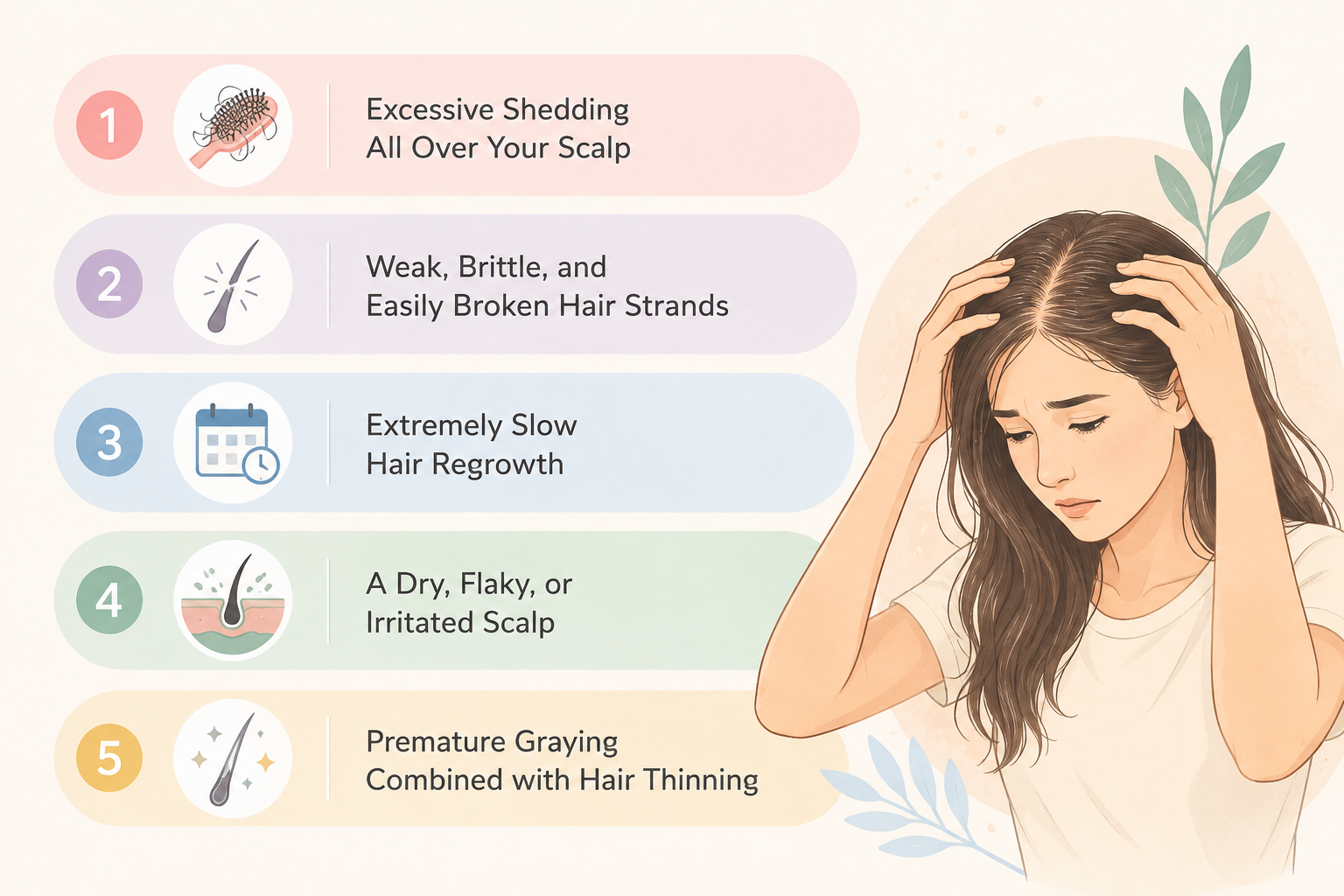
Identifying the exact reason for hair fall can be challenging. However, nutritional hair loss presents specific physical clues on your scalp and hair strands. Here are five unmistakable
signs that your hair loss might be directly linked to a deficiency in daily vitamins and minerals.
1. Excessive Shedding All Over Your Scalp
If you notice that your hair is falling out evenly across your entire head rather than in specific spots or along a receding hairline, you may be experiencing a condition called telogen effluvium. This type of diffuse hair loss is a primary indicator of a nutritional shortage in your body.
When your body suffers from a lack of essential nutrients such as Iron, Vitamin D, or Zinc, it shifts hundreds of hair roots from the active growth phase into the resting phase at once. A few weeks or months after this shift occurs, you will notice large amounts of hair coming out during washing, combing, or gentle pulling.
2. Weak, Brittle, and Easily Broken Hair Strands
Does your hair break off easily when you touch it, tie a ponytail, or run a comb through it? Weak and fragile hair shafts usually indicate that your body lacks sufficient Biotin, Vitamin C, or essential protein building blocks.
Biotin plays a central role in producing keratin, which is the natural structural protein that makes up your hair strands. When your body lacks Biotin, the structural integrity of your hair weakens. This causes the individual hair shafts to become dry, split easily at the ends, and snap off under light pressure. If you want to understand how this specific nutrient works in detail, you can read our complete guide on biotin for hair growth does it really work.
3. Extremely Slow Hair Regrowth
On average, human hair grows about half an inch every month. If you notice that your hair length has remained completely static for months, or if your hair takes an unusually long time to grow back after a haircut, a vitamin deficiency could be holding back your hair follicles.
Nutrients like Vitamin B12, Folate, and Iron are responsible for producing red blood cells. These red blood cells transport oxygen and fresh nutrition directly to your hair roots. Without enough of these blood building vitamins, your hair follicles go into a dormant state, causing new hair growth to slow down significantly or stop altogether.
4. A Dry, Flaky, or Irritated Scalp
Healthy hair requires a healthy scalp environment. If you suffer from constant scalp dryness, severe dandruff, or persistent redness alongside hair fall, your body may be missing crucial fat soluble vitamins and minerals.
- Vitamin A: Helps your scalp glands produce natural sebum, which is the natural oil that keeps your scalp moisturized and prevents hair roots from drying out.
- Vitamin C and Zinc: Protect your scalp skin from oxidative damage and reduce skin inflammation that can damage fragile hair roots.
When these nutrients are missing from your daily diet, your scalp skin becomes dry, inflamed, and prone to scaling, creating a poor foundation for hair roots to hold on firmly.
5. Premature Graying Combined with Hair Thinning
Noticing silver or gray hair strands alongside increasing hair shedding at a young age is often a sign of specific micronutrient shortages. Copper, Vitamin B6, Vitamin B12, and Iron help your body produce melanin, which is the pigment responsible for giving your hair its natural color.
A severe deficiency in B complex vitamins can cause premature loss of hair pigment while simultaneously weakening the hair root, leading to combined graying and thinning of your hair.
These signs are among the most common vitamin and mineral deficiencies in Indians due to modern dietary habits, high stress levels, and limited sun exposure.
Specific Vitamins and Minerals Essential for Hair Health
To reverse hair loss caused by nutritional gaps, you need to know exactly which vitamins and minerals play an active role in keeping your hair roots healthy. Here is a breakdown of the key nutrients your hair requires every single day.
Biotin (Vitamin B7)
Biotin is one of the most well known vitamins for hair care. It helps convert the food you eat into usable energy and supports the production of keratin protein. A lack of Biotin leads to hair thinning, loss of hair shine, and brittle fingernails.
Vitamin D3
Vitamin D3 is vital for hair health because it helps create new, active hair follicles on your scalp. Many people spend most of their time indoors, leading to dangerously low Vitamin D levels. Low Vitamin D3 is directly linked to widespread hair shedding and conditions like alopecia.
Vitamin C
Vitamin C is a powerful antioxidant that protects your hair follicles from environmental pollution and free radical damage. It is also required for your body to produce collagen, an important protein that strengthens the skin layer holding your hair roots. Furthermore, Vitamin C increases the absorption of plant based iron in your gut.
Zinc
Zinc plays an essential role in hair tissue growth and repair. It keeps the tiny oil glands surrounding your hair follicles functioning correctly. A lack of Zinc can lead to hair loss, slow wound healing, and a weakened scalp barrier.
Iron
Iron enables your red blood cells to carry oxygen throughout your bloodstream. When your iron stores drop too low, your body cannot deliver enough oxygen to your scalp. This lack of oxygen starves your hair roots, causing them to fall out prematurely.
To explore all the essential nutrients that promote thick and voluminous hair, check out our guide on the best vitamins for hair growth and thickness.
Common Lifestyle Habits That Cause Vitamin Deficiencies
You might wonder how you ended up with a vitamin deficiency in the first place. Even if you eat regular meals, certain everyday habits and modern lifestyle factors can prevent your body from absorbing or retaining essential nutrients.
- Unbalanced Diet: Consuming processed foods, fast food, and refined sugars regularly deprives your body of fresh vitamins and minerals.
- Extreme Dieting or Fasting: Cutting out whole food groups or following strict low calorie diets rapidly depletes your internal vitamin stores, leading to sudden hair fall.
- Lack of Sun Exposure: Staying indoors during peak daylight hours prevents your skin from producing natural Vitamin D3.
- High Stress Levels: Chronic physical or mental stress uses up your body’s supply of B vitamins and Vitamin C at an accelerated rate.
- Poor Gut Health: Digestive issues or poor gut absorption prevent your intestines from properly absorbing the vitamins present in your food.
How to Fix Vitamin Deficient Hair Loss

The good news about hair loss caused by vitamin deficiency is that it is usually temporary and reversible. Once you restore your body’s essential nutrient levels, your hair follicles can recover, re-enter the growth phase, and start producing healthy hair again.
Here is a simple, effective step by step plan to restore your hair from within:
1. Upgrade Your Daily Meals
Start by eating a wide variety of nutrient dense whole foods every day. Include fresh green leafy vegetables, nuts, seeds, fruits, legumes, whole grains, and lean proteins in your daily diet. Eating foods rich in Vitamin C alongside iron rich foods will help your body absorb nutrients much better.
2. Choose Clean, Science Backed Supplements
While a healthy diet is fundamental, busy daily routines and soil nutrient depletion make it difficult to get optimal levels of every single vitamin through food alone. Adding a daily supplement designed specifically for hair health can bridge these nutritional gaps effectively.
This is where Sehatboxx makes daily wellness simple, honest, and effective for you.
At Sehatboxx, we develop evidence based, research driven formulations crafted for real, visible results. We believe your health deserves clean, transparent ingredients that you can trust completely.
To help you combat hair thinning and promote strong, healthy growth, you can incorporate the Sehatboxx Hair Vitamin into your daily routine. Formulated with essential hair nutrients like Biotin, B Complex vitamins, and vital minerals, it nourishes your hair roots directly from the inside out.
Additionally, to boost your overall immunity, skin health, and collagen production, you can use Sehatboxx Vitamin C + Zinc + Vitamin D3 Effervescent Tablets. These fast dissolving, great tasting effervescent tablets ensure rapid absorption and make staying consistent with your daily vitamin routine easy and enjoyable.
3. Be Patient and Consistent
Hair growth requires time. Because your hair grows slowly, it typically takes anywhere from eight to twelve weeks of consistent nutrition and proper supplementation before you start noticing visible reduction in hair shedding and new growth along your hairline.
Final Thoughts
Hair loss can feel overwhelming, but understanding the root cause gives you the power to fix it. If your hair shedding is linked to a vitamin deficiency, giving your body the right mix of daily nutrients can bring your hair back to life. Focus on eating balanced meals, maintaining a healthy lifestyle, and supporting your daily routine with clean, effective nutrition from Sehatboxx. Take charge of your health today and give your hair the care it truly deserves!
Frequently Asked Questions
How do I know if my hair loss is due to vitamin deficiency or genetics?
Nutritional hair loss usually causes sudden, widespread shedding across your entire scalp, whereas genetic hair loss follows specific patterns like a receding hairline or thinning at the crown. A simple blood test recommended by your doctor can easily confirm if you have low vitamin levels.
How long does it take for hair to grow back after fixing a vitamin deficiency?
Once you fix your nutritional shortage through proper diet and daily supplementation, hair shedding usually slows down within four to eight weeks. Visible new hair growth generally becomes noticeable within three to six months.
Can taking too many vitamin supplements cause hair loss?
Yes, taking excessive amounts of certain vitamins, particularly Vitamin A and Selenium, can actually trigger hair shedding instead of preventing it. It is always best to follow recommended daily dosages and choose balanced, evidence based products like those from Sehatboxx.
Is Biotin alone enough to stop daily hair fall?
Biotin is very important for keratin production, but hair growth relies on a combination of multiple nutrients including Vitamin D3, Iron, Zinc, and Vitamin C. Taking a complete hair nutrition formula yields much better results than taking Biotin by itself.
Why are effervescent vitamin tablets better for daily consumption?
Effervescent tablets dissolve quickly in water, making the nutrients easier and faster for your stomach to absorb compared to traditional hard pills. They are gentle on your digestion, easy to drink, and provide a refreshing way to meet your daily nutrition goals.