
No products added!
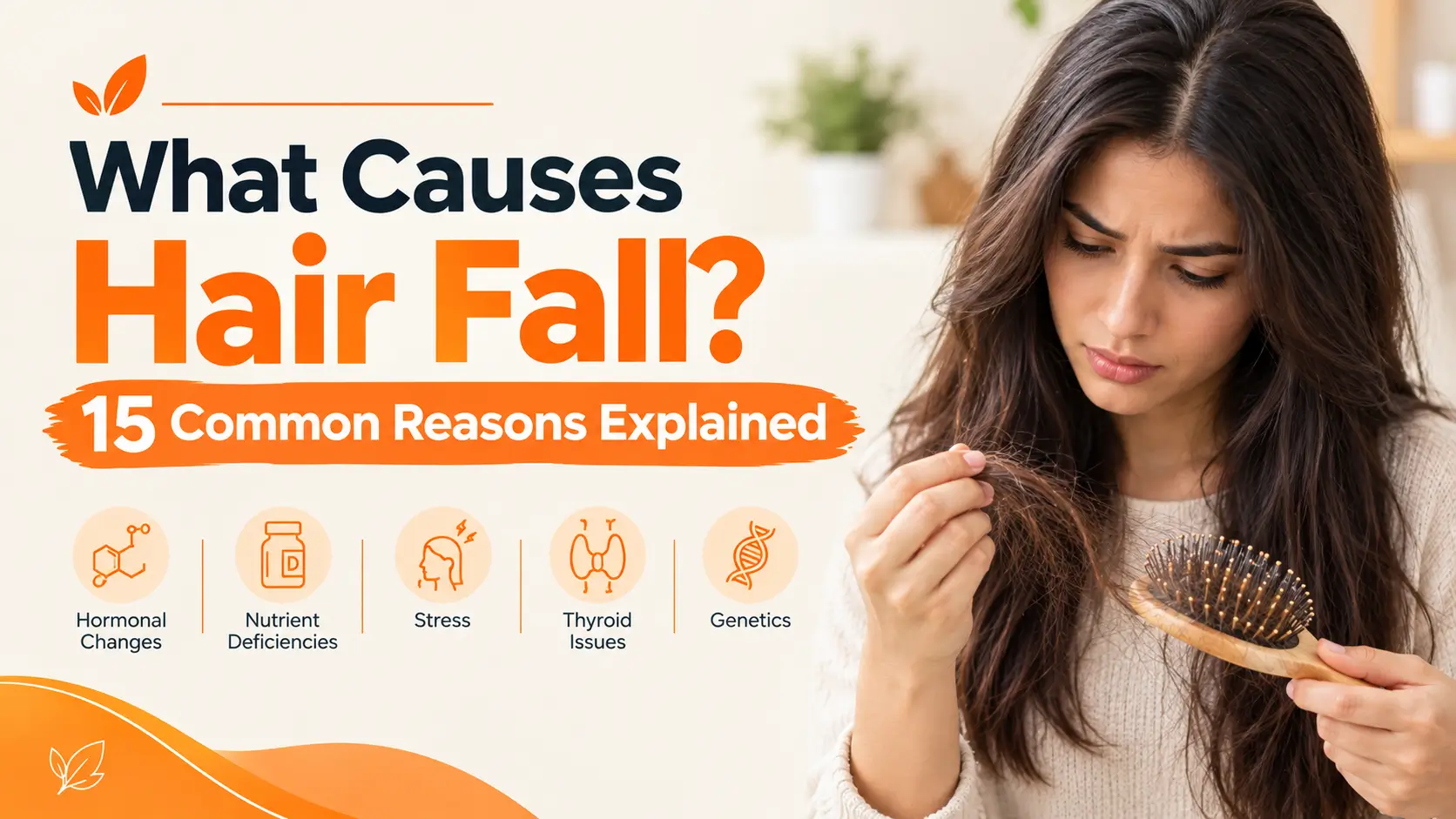
Finding extra strands of hair on your pillow, shower drain, or comb can feel worrying. While shedding some hair daily is normal, noticing more hair fall than usual often means your body is trying to signal a change. Hair growth is closely connected to your overall health, diet, daily habits, and stress levels.
Table of Contents
Understanding why your hair is thinning or shedding is the first step toward bringing back its strength and volume. In this guide, you will learn about the fifteen most common reasons for hair fall, how everyday factors affect your scalp, and what you can do to keep your hair healthy.
Understanding Normal Hair Shedding Versus Excessive Hair Fall
Every single hair on your head goes through a natural lifecycle. This cycle includes a growing phase, a resting phase, and a shedding phase. On average, a person loses between fifty to one hundred strands of hair each day. This is a normal part of the renewal process because new strands grow in to replace the old ones.
Excessive hair fall happens when this balance is disrupted. When more hair follicles than usual enter the shedding phase, or when new growth slows down, you will start to notice thinning, wider partition lines, or a receded hairline. Pinpointing the root trigger helps you address the problem effectively before significant loss occurs.
15 Common Causes of Hair Fall
1. Essential Vitamin Deficiencies
Your body needs a constant supply of vitamins and minerals to produce strong hair strands. Lacking essential nutrients directly impacts how hair follicles grow and retain strands. If you notice persistent shedding, look closely for signs your hair loss could be due to vitamin deficiency. Low levels of B vitamins, Vitamin D, iron, and zinc weaken hair roots, leading to noticeable shedding.
2. High Stress Levels
Physical or emotional stress places a heavy burden on your body. When you experience high stress, your body releases hormones like cortisol. Elevated cortisol can force a large number of hair follicles into a resting state prematurely. Weeks or months after a stressful event, you may notice heavy shedding during washing or combing.
3. Hormonal Imbalances
Hormones play a massive role in regulating hair growth cycles. Thyroid disorders, polycystic ovary syndrome, pregnancy, and menopause cause fluctuations that weaken roots. When thyroid hormone levels drop or spike, or when androgen levels rise, hair strands become thin and fall out prematurely.
4. Poor Daily Nutrition
Hair is made of a tough protein called keratin. If your regular diet lacks clean protein, healthy fats, and key micronutrients, your body prioritizes vital organs over hair growth. Strict crash dieting or skipping meals starves the follicles, causing strands to become brittle and drop out.
5. Lack of Sufficient Biotin
Biotin, also known as Vitamin B7, is essential for keratin production. A shortage of this nutrient can make your hair fragile and prone to breakage. Many people ask, biotin for hair growth does it really work? Yes, maintaining optimal biotin levels supports keratin infrastructure, which reduces breakage and strengthens roots.
6. Harsh Chemical Hair Treatments
Frequent dyeing, bleaching, perming, or chemical straightening strips away the natural protective layer of your hair. These aggressive chemical processes weaken the hair shaft, cause split ends, and damage the scalp environment, leading to increased breakage near the roots.
7. Frequent Heat Styling
Blow dryers, curling irons, and flat irons strip moisture out of your hair strands. Using high heat without thermal protection weakens the protein bonds inside each strand. Over time, heat damaged hair becomes dry, snaps easily, and appears significantly thinner.
8. Genetic Predisposition
Genetics is one of the most widespread factors behind thinning hair. Hereditary pattern baldness affects millions of men and women worldwide. It usually presents as a gradual receding hairline or thinning at the crown. Understanding these genetic factors helps you take proactive steps early.
9. Tight Hairstyles and Scalp Traction
Wearing tight ponytails, braids, buns, or extensions creates constant tension on your hair roots. This continuous pulling damages hair follicles over time, leading to a condition called traction alopecia. Loosening your hairstyles gives your roots a chance to rest and recover.
10. Scalp Infections and Dandruff
A healthy scalp provides the base for healthy hair. Fungal infections, severe dandruff, or scalp psoriasis cause inflammation, itching, and redness. Continuous scratching damages hair roots, causing temporary hair fall until the underlying scalp issue is treated.
11. Medication Side Effects
Certain prescription medicines can trigger hair shedding as a side effect. Drugs used for high blood pressure, arthritis, depression, heart problems, and blood thinners can interfere with the normal growth cycle of hair follicles.
12. Post Pregnancy Changes
During pregnancy, high estrogen levels keep hair in its growing phase, making it look full and lustrous. After delivery, hormone levels drop rapidly. This sudden shift forces many hair follicles into the shedding phase at once, causing post-partum hair fall.
13. Over Washing or Under Washing Your Hair
Washing your hair too often strips away natural protective oils, leaving your scalp dry and irritated. On the flip side, not washing enough allows dirt, sweat, and product buildup to clog hair follicles. Striking the right balance keeps your scalp clean and supported.
14. Environmental Stressors and Pollution
Exposure to severe air pollution, harsh sun rays, hard water, and changing weather conditions weakens hair strands. Hard water contains minerals like calcium and magnesium that leave residue on your hair, making it rough, dull, and prone to breaking.
15. Aging and Natural Changes
As you age, the rate of hair growth naturally slows down. Hair strands become finer, lose density, and carry less pigment. While aging is natural, nourishing your scalp and body helps maintain healthy hair density for longer.
How to Prevent Hair Fall and Nourish Your Hair
Stopping excess hair fall requires a complete approach that combines good scalp care with internal nutrition. Here are practical steps you can take today:
- Eat a balanced diet: Focus on whole foods rich in protein, greens, seeds, and healthy fats.
- Be gentle with wet hair: Wet hair is fragile. Use a wide tooth comb to detangle gently from tips to roots.
- Avoid tight hairstyles: Opt for loose styles to protect your hair follicles from friction and traction.
- Manage your stress levels: Practice light exercise, yoga, or deep breathing to support your overall health.
- Nourish from within: Supplementing your daily routine with target nutrients provides your roots with necessary nourishment.
For a complete guide on how these factors affect both genders, explore the 12 common causes of hair fall in men and women.
Fuel Your Hair with Sehatboxx Daily Nutrition
External hair care products like shampoos and oils clean the surface, but true hair strength starts deep inside your follicles. When your daily diet falls short, targeted nutrition bridges the gap.
Discovering the best vitamins for hair growth and thickness helps you choose solutions that deliver real results. The Sehatboxx Hair Vitamin is an effervescent tablet designed to deliver essential hair nutrients in a fast absorbing, delicious form. Each tablet supplies clean, transparent ingredients engineered to support scalp health, reduce breakage, and promote stronger hair strands.
If you are unsure about the ideal daily intake, check our detailed daily biotin hair vitamin dosage guide to build a safe, consistent daily wellness routine.
Frequently Asked Questions
1. How long does it take to notice a reduction in hair fall after fixing vitamin deficiencies?
It usually takes three to six months of consistent nutrient intake to see reduced hair fall and new growth, as hair grows in slow cycles.
2. Can stress related hair fall be reversed naturally?
Yes, hair fall caused by stress is usually temporary and improves once stress levels are managed and healthy habits are restored.
3. Is daily hair washing harmful for hair roots?
Washing your hair daily with harsh shampoos can strip natural oils, so it is best to wash two to three times a week using mild products.
4. How does an effervescent hair vitamin help compared to regular pills?
Effervescent tablets dissolve fully in water, making the nutrients easier for your body to digest and absorb quickly.
5. When should you consult a doctor for hair fall?
You should see a doctor if you experience sudden patchiness, painful scalp itching, or severe hair thinning that lasts longer than a few months.